
Sonoma · Sauna Builder Services
Infrared Saunas
Infrared cabins and built-in panel rooms that heat your skin directly while the air sits around 120 to 150 degrees, installed in homes around Sonoma County with correct wiring and placement.
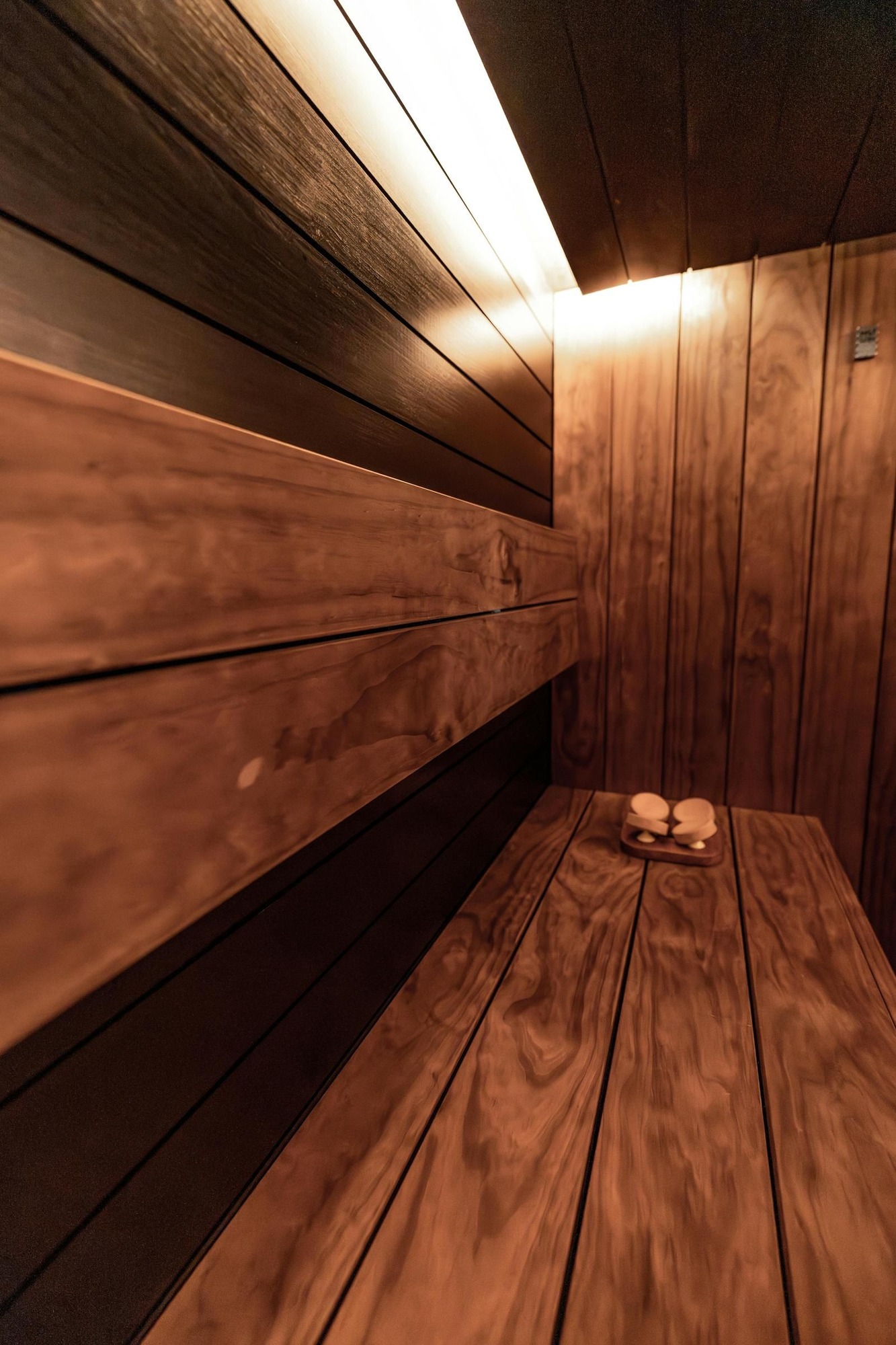
Radiant heat for people who prefer a gentler session
An infrared sauna warms you with carbon or ceramic emitter panels instead of heating the air to 180 degrees. The room sits between about 120 and 150, and the warmth soaks in from the panels in front of you and behind you. Folks who bail out of a Finnish room after ten minutes can often sit in infrared for half an hour or longer. It also starts faster, and the lower power draw suits houses with limited panel capacity.
We install prefab cabins from Sunlighten, Clearlight and Almost Heaven, and our carpenters also frame panel rooms on site, finished in basswood or cedar. A spare room in a Windsor tract house, a loft in a Sebastopol barn and a corner of a Sonoma home gym are all typical spots. If you want the full hot-rock experience instead, see our traditional saunas.
Infrared cabins are mostly indoor units, though some are rated for covered patios. For a room exposed to west county damp or valley sun, our outdoor saunas are the better fit. And if you already own a cabin with a dead panel or a failing controller, sauna repair may be all you need.
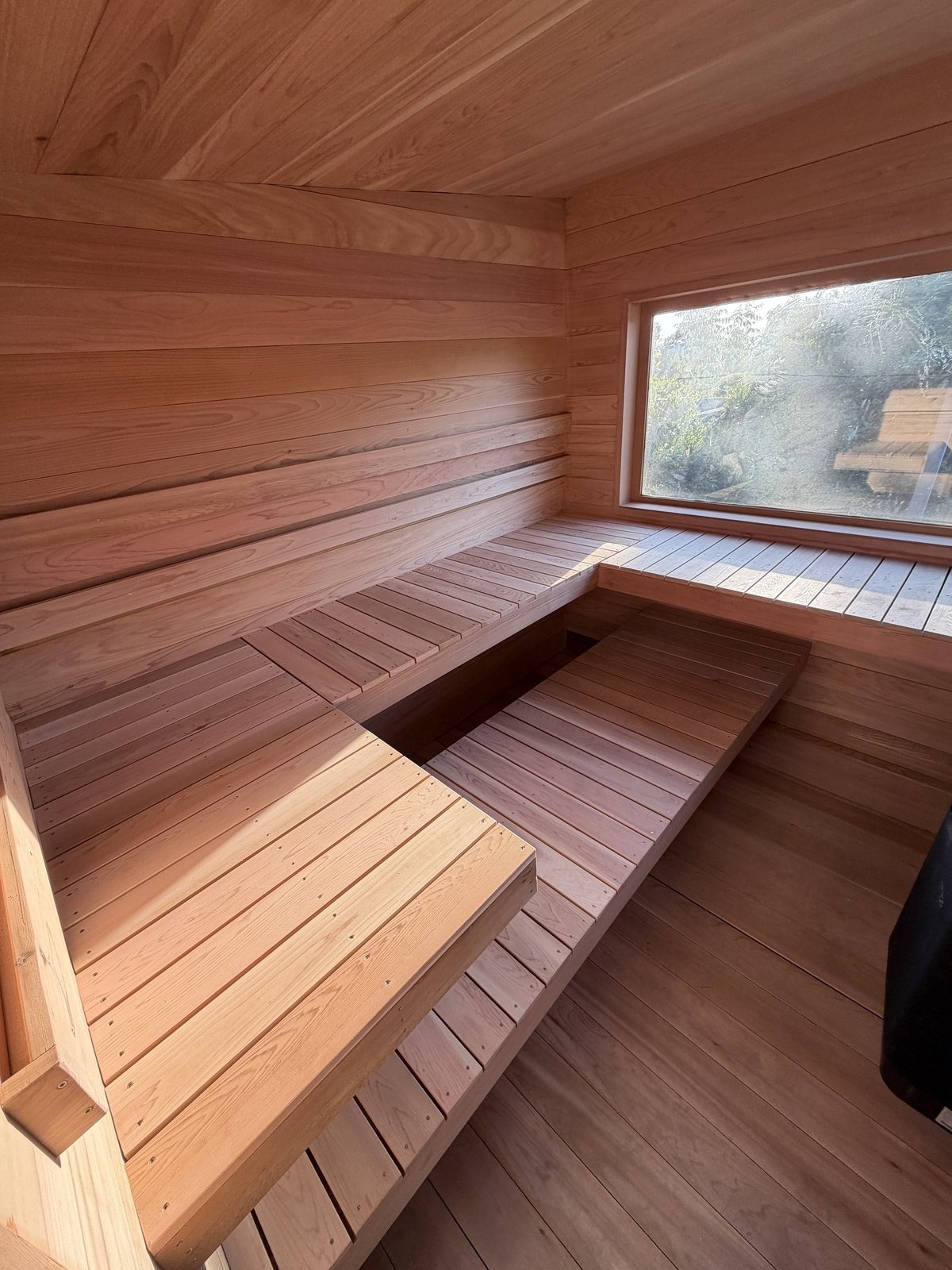
Infrared done by a builder
Many infrared cabins get sold as plug-and-play, and some are. Others need a dedicated circuit, and all of them perform better with thought about placement and ventilation. Our home sauna builders handle the parts a delivery crew skips.
- We check the cabin's rated amperage against your circuit before delivery day.
- We level and shim the floor so the panels and door line up properly.
- We recommend low-EMF models and share the published test data with you.
- We can add a real electric heater to create a hybrid room later.
- We carry panels and controllers for common brands, so repairs move quickly.
- We build custom panel rooms when no prefab cabin fits the space.
Who does well with an infrared room
Infrared suits certain homes and certain users better than others. These are the most common reasons clients choose it.
You want a daily routine
An infrared cabin is warm enough to use about a quarter hour after you switch it on. That short warm-up makes it easy to use after work or before a morning ride out toward Jack London State Park.
The electrical service is small
A two-person cabin often runs on a 20-amp circuit, and some run on 120V. Homes in older Sonoma neighborhoods with 100-amp service can often add infrared without an upgrade.
High heat is uncomfortable for you
Some people find 180 degrees hard to breathe in. The lower air temperature of infrared is easier on the lungs while still bringing on a good sweat. Check with your doctor if you have a heart condition.
Space is tight
One-person and two-person cabins fit in a closet footprint. They need only a few inches of clearance and no roof vent.
You plan to move someday
A freestanding cabin comes apart in panels and can move with you. We can disassemble and reinstall it at your next house.
How an infrared install goes
Pick the unit
We visit, measure, check the circuit and help you compare models by size, panel type, wood and EMF levels.
Prepare the space
We add a dedicated outlet or hardwired circuit where needed, level the floor, and plan the location so the door swing and ventilation work.
Assemble and test
We put the cabin together, connect the panels and controls, and run a full heating cycle to confirm every emitter works. Should one ever fail, our repair service can swap it.
Choosing infrared components
Infrared rooms vary more than they look. These are the parts worth comparing.
Emitter panels
Carbon panels spread gentle heat across a wide surface. Ceramic emitters run hotter in smaller spots. Full-spectrum setups mix in shorter wavelengths as well. We explain the differences in plain terms.
Wood
Canadian hemlock and basswood are common in cabins because they are low odor and stable. Cedar smells stronger, which some people love and others avoid.
Controls
Inside and outside touch panels, app control through Wi-Fi, and scheduling so the cabin warms up before you pull in the driveway.
Speakers and lighting
Many cabins come with Bluetooth speakers and chromotherapy lights. We can add or upgrade both in a built-in room.
Ventilation
Infrared rooms need less airflow than a hot-rock room, but a small adjustable vent still keeps the air fresh during longer sessions.
Infrared room pricing
Prefab cabins installed in a Sonoma County home usually run from about four thousand to fifteen thousand dollars. Custom panel rooms cost more. What changes the price:
- Brand and cabin size, from one-person units to five-person models.
- Panel type, with full-spectrum systems at the top of the range.
- New wiring, if the cabin needs a hardwired 240V circuit.
- Floor prep, especially over carpet or an uneven slab.
- Custom wood and built-in finishes for panel rooms.
We quote the cabin and the install together so there is one number. For anyone who also wants to splash water on stones, ask about a hybrid built alongside our Finnish-style rooms.
Frequently Asked Questions
How do traditional saunas compare to modern infrared saunas?
Traditional rooms heat the air to 160 to 195 degrees with a stove and let you throw water for steam. Infrared cabins run cooler and drier, with the panels heating you instead of the air. Traditional takes longer to heat and draws more power. Infrared is gentler and quicker. Your own tolerance for heat usually settles the choice.
Which brands provide eco-friendly sauna heaters and steam generators?
In infrared, Sunlighten and Clearlight publish low-EMF data and use sustainably sourced wood. For traditional rooms, Huum and Harvia make efficient electric heaters, and Kuuma wood stoves burn clean. We are happy to compare energy use across models.
Does an infrared sauna need a dedicated circuit?
Small cabins sometimes plug into a standard 120V outlet on its own circuit. Larger ones need a dedicated 240V line, usually 20 to 30 amps. We check the specs and your panel before delivery.
Can an infrared cabin go outside?
Just the units the maker labels for outdoor duty, and those still want a roof overhead. Fog and winter rain in the west county are hard on electronics, so we usually suggest a covered porch or a built outdoor room.
Is a sauna in your house worth it?
If you use it several times a week, yes. Infrared is especially easy to fit into a routine because it warms up fast and costs little to run. Most of our clients use theirs far more often than they expected.
See all FAQs on our FAQ page.
Planning infrared saunas in Sonoma?
Send us a few lines about the space you have in mind, or call, and we will set up a visit and a free estimate. We will talk through heat source, size and budget, and there is no obligation to go ahead.
Or call us now: 707-744-3951