
Sonoma · Sauna Builder Services
Cedar Tub Install
Wooden hot tubs and Japanese soaking tubs in cedar or hinoki, set on proper bases with heaters, filtration and fitted cedar tub covers, for decks, patios and bathrooms around the county.
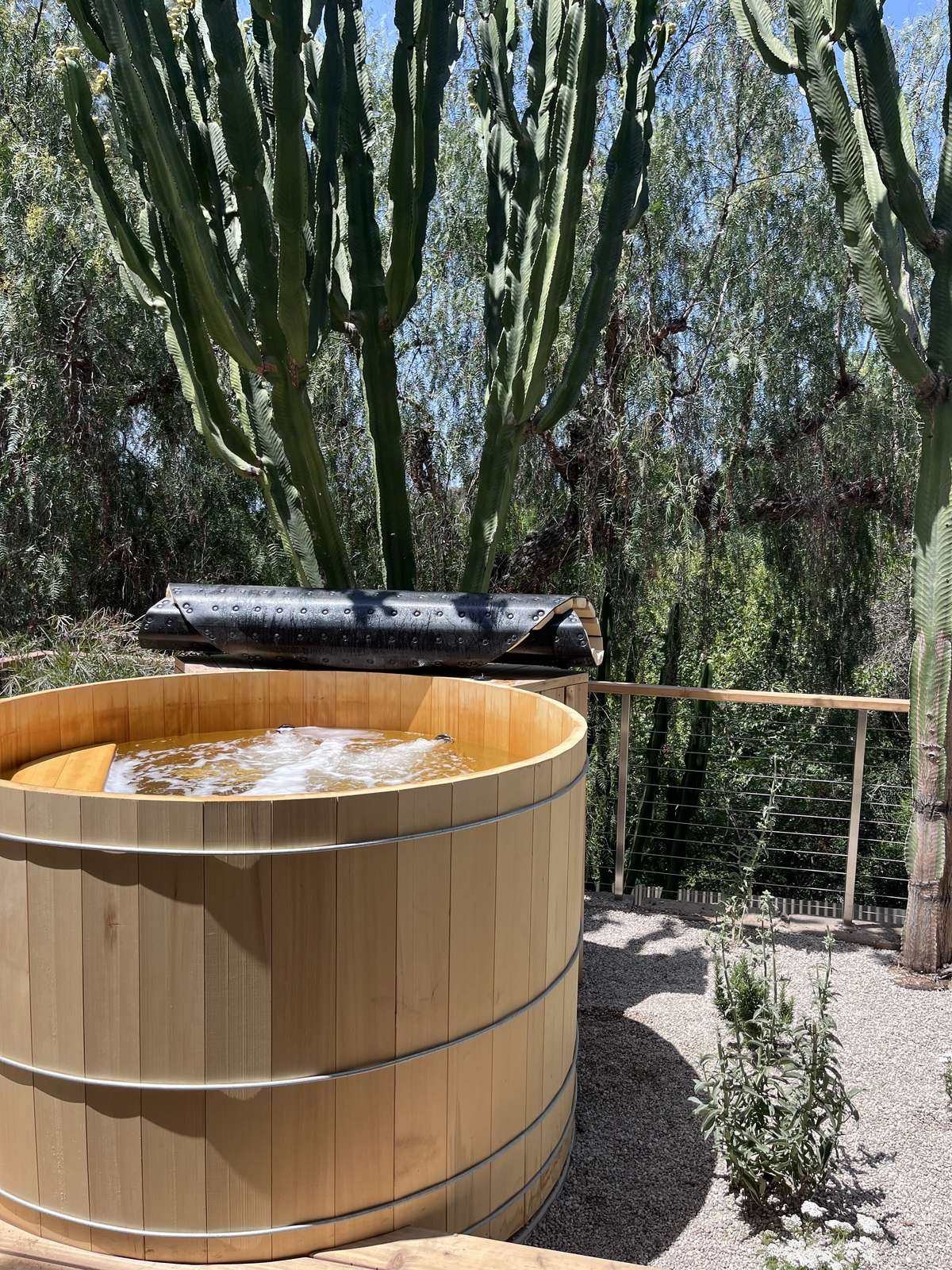
Soaking in wood, the way the Springs once did
Long before anybody around here used the word wellness, people rode the train up to Boyes Hot Springs and Agua Caliente to sit in warm mineral water after a hard week. A cedar tub brings a little of that habit home. We install round and oval wooden hot tubs, deep Japanese tubs for a bathroom or covered porch, and wood-fired soakers for ranch owners who like lighting a fire and waiting for the water to come up while the sun goes down.
Wood behaves differently from acrylic. The staves swell tight when the tub is full, shrink when it sits empty and shift a little with every change in the weather. Good installation keeps that movement harmless. We set each tub on a level, well-drained base with air moving under the floorboards, snug the bands on a schedule, and plumb the heater and filter so the system can be drained and serviced without pulling anything apart. It is the same care you would want on any hot tub install, with more attention to the wood.
Plenty of clients treat the tub as the warm half of a hot and cold routine and put a cold plunge install a few steps away. Others set it beside a sauna they already own. If you are starting from scratch, our crew can plan the tub alongside a full sauna installation so the two share one pad and a single electrical run.
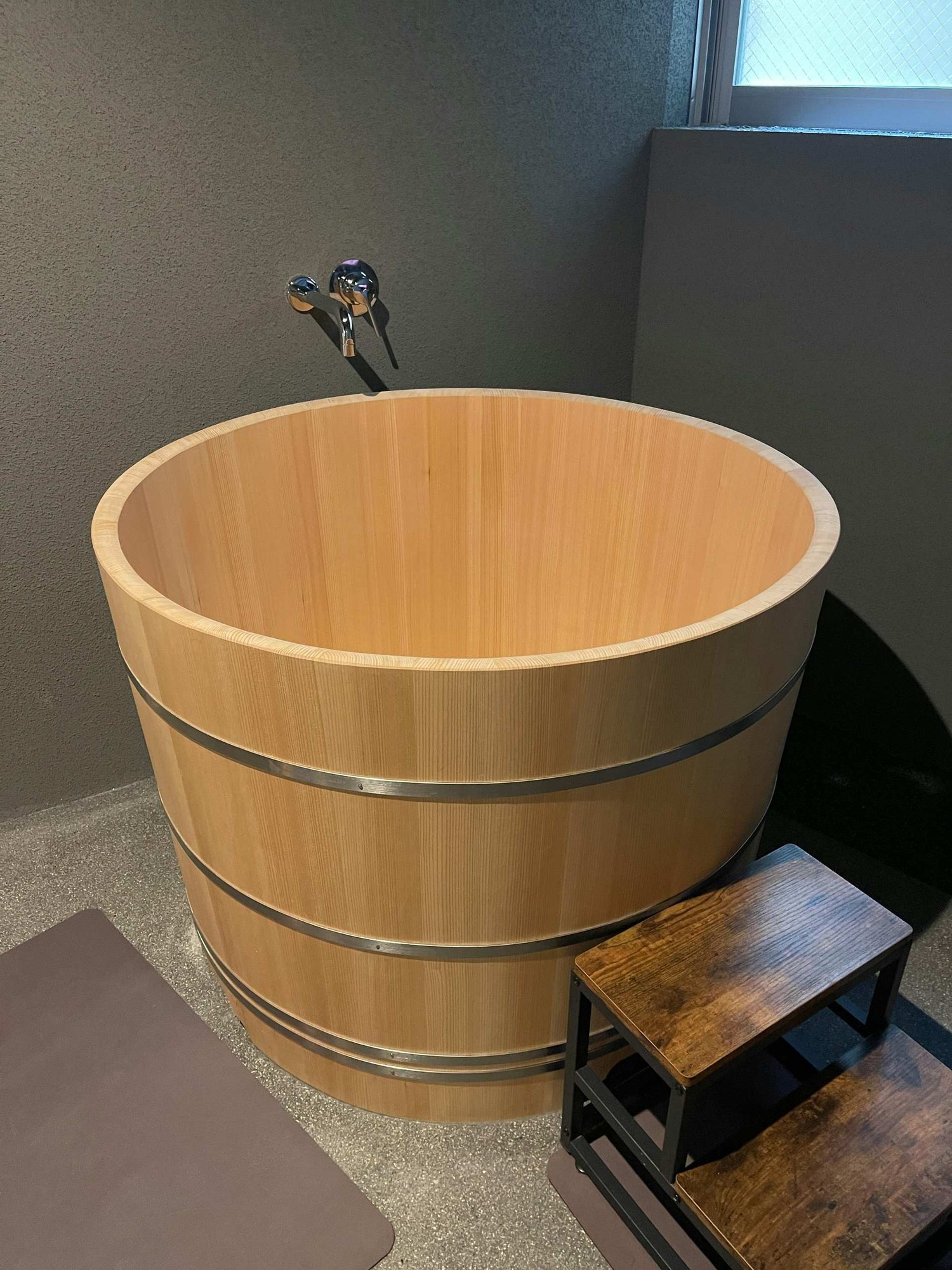
Why the base and the water matter more than the barrel
Buying a well-made cedar tub is the easy part. Keeping it tight, clean and warm for fifteen years comes down to the base, the water chemistry and the heating setup, and that is where we spend our hours. We have set tubs on vineyard terraces, on redwood decks in Sebastopol and inside a converted hay barn, and each needed a slightly different answer. If the tub is one part of a bigger backyard plan, have a look at the full list of what our crew builds.
- We level and drain the base so the floorboards never sit in standing water.
- We test well water first, because hard water scales heaters and stains cedar.
- We size filtration and sanitizing to how often you actually plan to soak.
- We fit wood-fired, electric and gas-assisted heaters.
- We build insulated lids that shed rain and keep heat in overnight.
- We walk you through the fill, drain and band routine before we pack up.
When a wooden tub is the right fit
A cedar tub suits some properties and some routines better than others. These are the cases where we point people toward one.
You want a soak without a molded plastic shell
Cedar and hinoki smell good, feel warm against the skin and weather to a soft silver that suits a rural yard. Owners who dislike the look of a boxy spa usually find a wooden tub sits more comfortably next to a barn, a split-rail fence or a stand of valley oaks.
There is firewood on the property
Ranches and farmsteads often have a steady pile of oak and fruitwood from pruning. A wood-fired tub turns it into hot water with no power bill at all, and it keeps working when the utility shuts the lines off on a gusty October night.
The bathroom has room for a deep tub
A Japanese tub fits a smaller footprint than a Western bath because you sit upright with water to your shoulders. In a remodel of a 1970s ranch house, one can replace a tired tub and shower combo and change how the whole room gets used.
Warm days end in cool evenings
Valley air drops fast once the sun is behind the Mayacamas. A tub kept around 100 degrees, a few below a typical spa, is pleasant at dusk in August and still welcome after a frosty January sunset.
You are pairing it with a sauna
Tub, hot room and cold water together make a full bathing circuit. A tub near the sauna door also gives guests who dislike dry heat somewhere comfortable to sit while everyone else sweats.
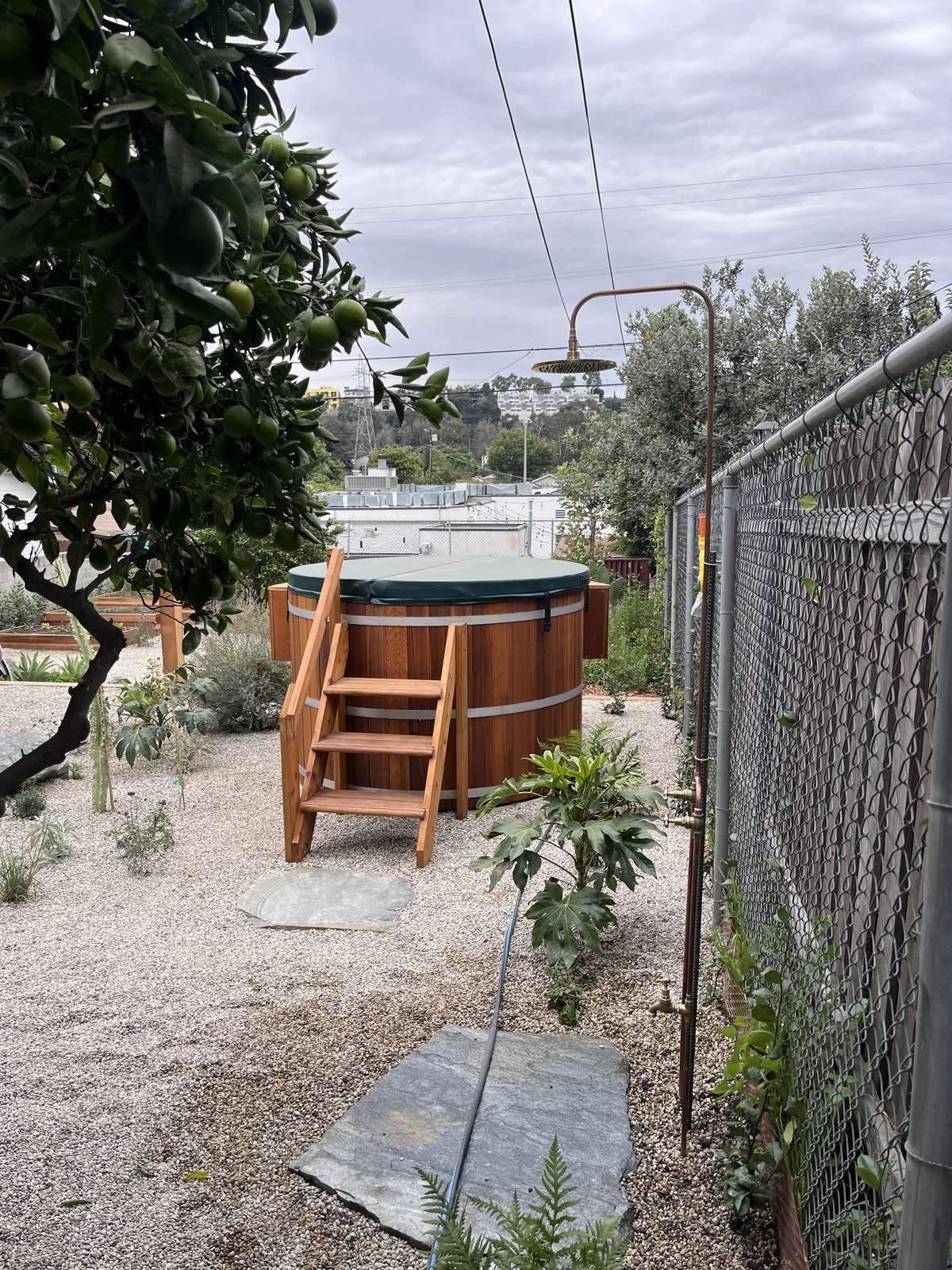
How we set a cedar tub
Water test and site check
If you are on a well we check hardness, iron and pH. We look at where the tub will sit, how it will drain and how people will get in and out. The written quote names the tub, heater, filter, lid and base.
Base and utilities
We pour a slab or frame a deck section rated for a full tub with people in it, which is frequently more than two tons. Plumbing, power and any gas line are roughed in before the tub arrives, so the assembly days go smoothly.
Assembly and first fill
Staves, floor and bands go together on site. We fill slowly, let the wood take up water for a day or two and snug the bands as it tightens. A little weeping at the seams in the first few days is normal and stops as the wood swells.
Heater, filter and handover
We fire or switch on the heater, set up the filter and sanitizer, fit the lid and show you the drain valve, the cleaning routine and what a loose band looks like.
Tub styles, heaters and lids
Most of our wooden tub projects involve some mix of the following choices.
Types of wood
Western red cedar is the usual pick and holds up well outdoors. Hinoki cypress is the traditional Japanese wood, pale and fragrant, and happiest indoors or under a roof. Alaskan yellow cedar is harder and resists wear on the seat edges where people slide in and out.
Japanese tubs
Deep, compact and often square, these are built for sitting still. We set them in bathrooms with a tiled wet zone around them, so you rinse off first and then soak, the way they are used in Japan. One placed beside a steam sauna or steam shower makes a complete wet room.
Wood-fired heaters
Internal stoves sit inside the tub behind a guard. External stoves sit alongside and circulate water through a coil. The external type keeps smoke and ash away from bathers and is easier to clean out.
Electric and gas heating
Electric heaters need a dedicated circuit and hold a steady set point. Gas heaters bring cold water up faster on a winter weekend. On hard well water we add a scale filter ahead of either one.
Filtration
A cartridge filter and a small pump keep the water clear between drains. Some owners skip chemicals entirely and drain and refill every week, which works for a small tub as long as the well can keep up.
Cedar tub covers
An insulated lid cuts heat loss and keeps oak leaves and redwood needles out. We build cedar-clad covers around a rigid foam core, fit them to the rim, and add a simple lift so one person can open the tub without help.
What a wooden tub costs to put in
Installed cedar tubs in Sonoma County usually run from about nine thousand dollars for a small wood-fired soaker to thirty thousand or more for a large electric tub with a new deck and lid. The price depends on:
- Tub size, shape and wood species.
- The heater, and whether it needs a stove, an electric element or a gas line.
- Base work, anywhere from a gravel pad to a framed deck.
- Filtration, sanitizing and any treatment for well water.
- An insulated cover and a lift.
- Drain routing, which takes extra care on septic properties.
You get one written price for the finished tub. If a sauna might join it in a year or two, we plan the pad and utilities for both now, which makes the second project noticeably cheaper.
Frequently Asked Questions
How many years will a wooden tub hold up?
Twenty years or more with steady use and simple care. Tubs that stay full last longest, because the wood stays swollen and tight. Long dry spells, standing water under the floor and harsh chemicals are what shorten their life.
Does hard well water hurt a wooden tub?
It can leave white scale on the heater and gray marks on the wood. Many properties around Kenwood and Glen Ellen draw mineral-heavy water, so we test before the first fill and add a softener or scale filter when the numbers call for one.
Can a cedar tub go on my existing deck?
Sometimes. A full tub with people in it puts a heavy load on a small area, so joists, beams and footings all need checking. We often add posts and a beam under the tub footprint, or cut the tub into the deck on its own concrete pad.
How do I look after a cedar tub between soaks?
Keep the lid on, check the sanitizer or change the water on a regular schedule, and rinse the filter every week or two. Once a season, look over the bands and tighten any that have slackened. Skip bleach-based cleaners, since they dry out and gray the wood.
Is a wood-fired tub safe during fire season?
It can be, with sensible limits. Fit a spark arrestor, keep a cleared circle around the stove and leave it cold on red flag days. On parcels in high hazard zones, many owners choose an electric heater and save the wood fire for the wet months.
See all FAQs on our FAQ page.
Planning cedar tub install in Sonoma?
Send us a few lines about the space you have in mind, or call, and we will set up a visit and a free estimate. We will talk through heat source, size and budget, and there is no obligation to go ahead.
Or call us now: 707-744-3951